The Well-Informed Christian
A Review of ‘Realities: Taking the Gospel to the Unreached’

Ken Katayama was born to a Japanese Buddhist father and a Roman Catholic mother in Brazil in 1980. At the age of 15, after hearing the gospel from Mennonite neighbors, he received Christ as his Savior and the course of his life was forever changed. Two years later he attended a missions conference and for the first time was confronted with the reality that billions of people had never heard the life-changing gospel. After a mission trip to Turkey, he knew what he had to do with his life: “From that day forward, I had to act! My reality in Christ had to impact the reality of the unreached people groups.”
Do you know what a people group is? The well-informed Christian can explain this term as well as other terms of missiology: the study of missions. Ken Katayama can be one of your reliable guides to getting informed.
What Is an Unreached People Group?
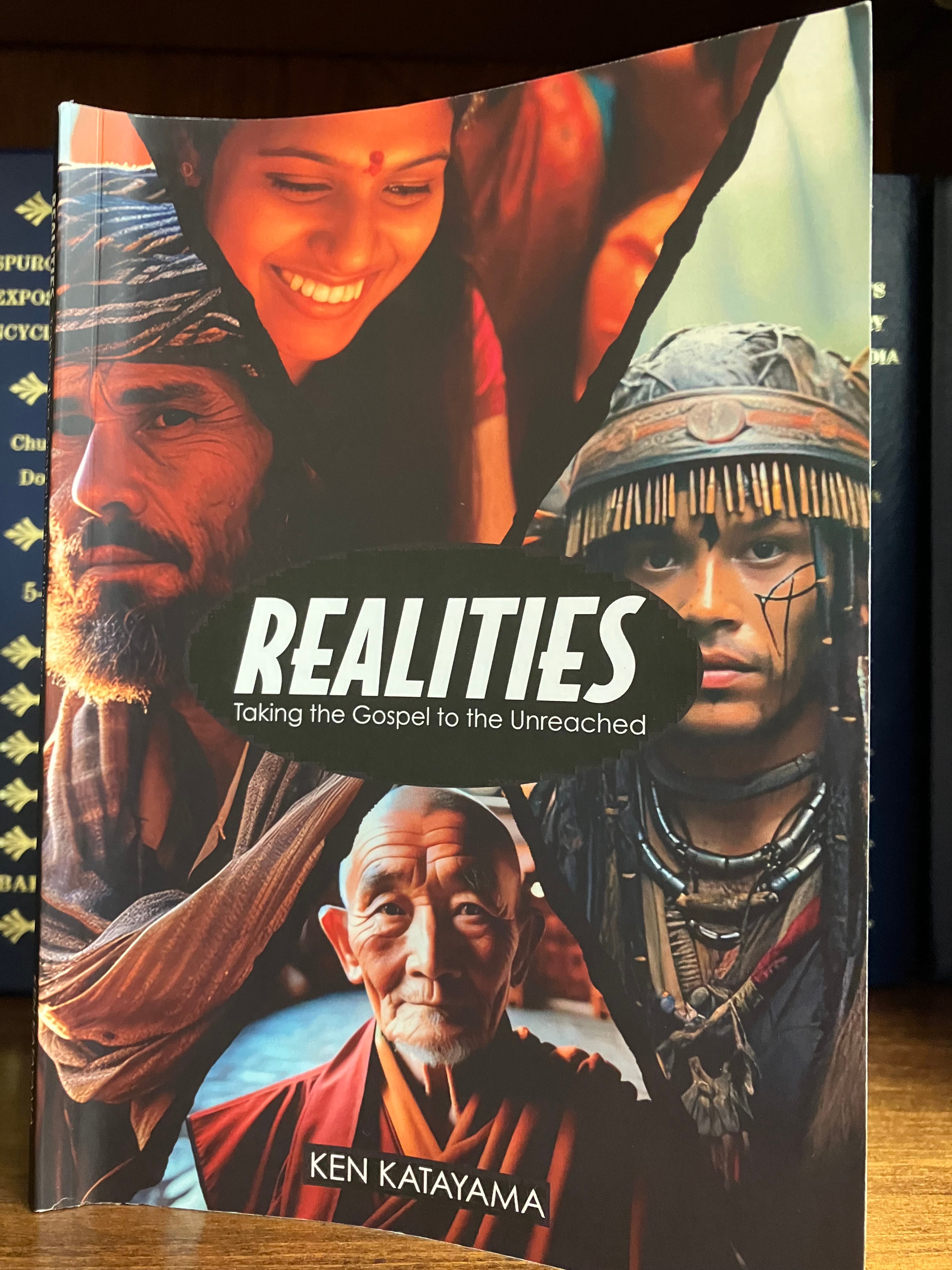
In Part One of his book, Realities: Taking the Gospel To the Unreached, Katayama explains what captured his heart and transformed his life’s ambition. At that missions conference, he learned that an unreached people group is a people group (sharing things like customs, language, ethnicity, nationality, and history) in which there is no church or group of churches with enough people or resources to evangelize the people group without outside help. These precious people haven’t heard the gospel and they can’t hear the gospel because they don’t know any Christians who can tell them about Jesus. Of the 8 billion people on this planet, 42% have never heard the gospel in a culturally relevant way. That’s about 3.4 billion people.
Four Worlds of the Unreached
In Part Two, Katayama explains that most unreached people live in four worlds. A challenge in communicating these truths is the two different ways we can understand the word, “nation.”
In the Bible, “nation” refers to an ethnolinguistic group: people who share things like language, culture, religion, and history. Today most people understand “nation” to refer to a nation-state with clear borders, like the United States, France, or South Korea. But within the modern nation-states there are many “nations,” or people groups. Jesus commanded his disciples to “make disciples of all nations,” (Mt. 28:18–20) and the Greek word for nations is ethnoi, where we get the word ethnic. We are to make disciples of all the ethnic groups of the world.
So, while I live in the nation of the United States, my nation is teeming with numerous “nations” and many of these people groups in my own country are unreached and need the gospel. But across the globe, most unreached people live in four worlds:
The Buddhist World: 500 million Buddhists represent 6.5% of the world’s population.
The Animist World: 736 million Animists represent 9.5% of the world’s population.
The Muslim World: 1.8 billion Muslims represent 24% of the world’s population.
The Hindu World: 1.2 billion Hindus represent 15% of the world’s population.
Combined, these four worlds represent 55% of the people on our planet and most of them have no access to the gospel. There is no church in their city or region. They don’t know any Christians. Many of them don’t have a Bible in their language.
We Have Work To Do!
In Part Three, Katayama considers the implications for the reader who is now informed about unreached people groups.
“I have shared my personal story because, like me, you need to make a decision. Like me, there is no excuse for you to continue following Jesus while denying the reality that entire people groups are born, live, and die without ever having a chance to hear about the love of our Creator in Christ Jesus.” (116).
Missions Is the Logical End of Sound Christian Doctrine
This book is an excellent introduction to some of the basic terms and statistics that every well-informed Christian should know. When I was confronted with these realities over forty years ago, I also recognized that I was now responsible to do my part in reaching the unreached. That’s when I committed to pastoring a missions-minded sending church. Since the day I arrived at First Bible Church, my aim has been to send as many missionaries and as much money to the gospel-deprived places on our planet as the Lord would allow.
Because Jesus is the only way to be reconciled to God, he made the audacious claim that “no one comes to the Father except through me” (Jn. 14:6). Paul told Timothy that “there is one mediator between God and men, the man, Christ Jesus” (1 Timothy 2:5). He reasoned with the Galatians that if there was some other way to heaven, then “Christ died for no purpose” (Gal. 2:21). He praised the Thessalonians for turning “from idols to serve the living and true God” (1 Th. 1:9). There simply is no other way to gain heaven and escape hell except by faith alone in Christ alone. But no one believes in Christ until they hear of him. That’s where we come in. We cannot keep the gospel to ourselves. We have a moral obligation, a sacred privilege, a binding mandate to take the gospel to all the nations.
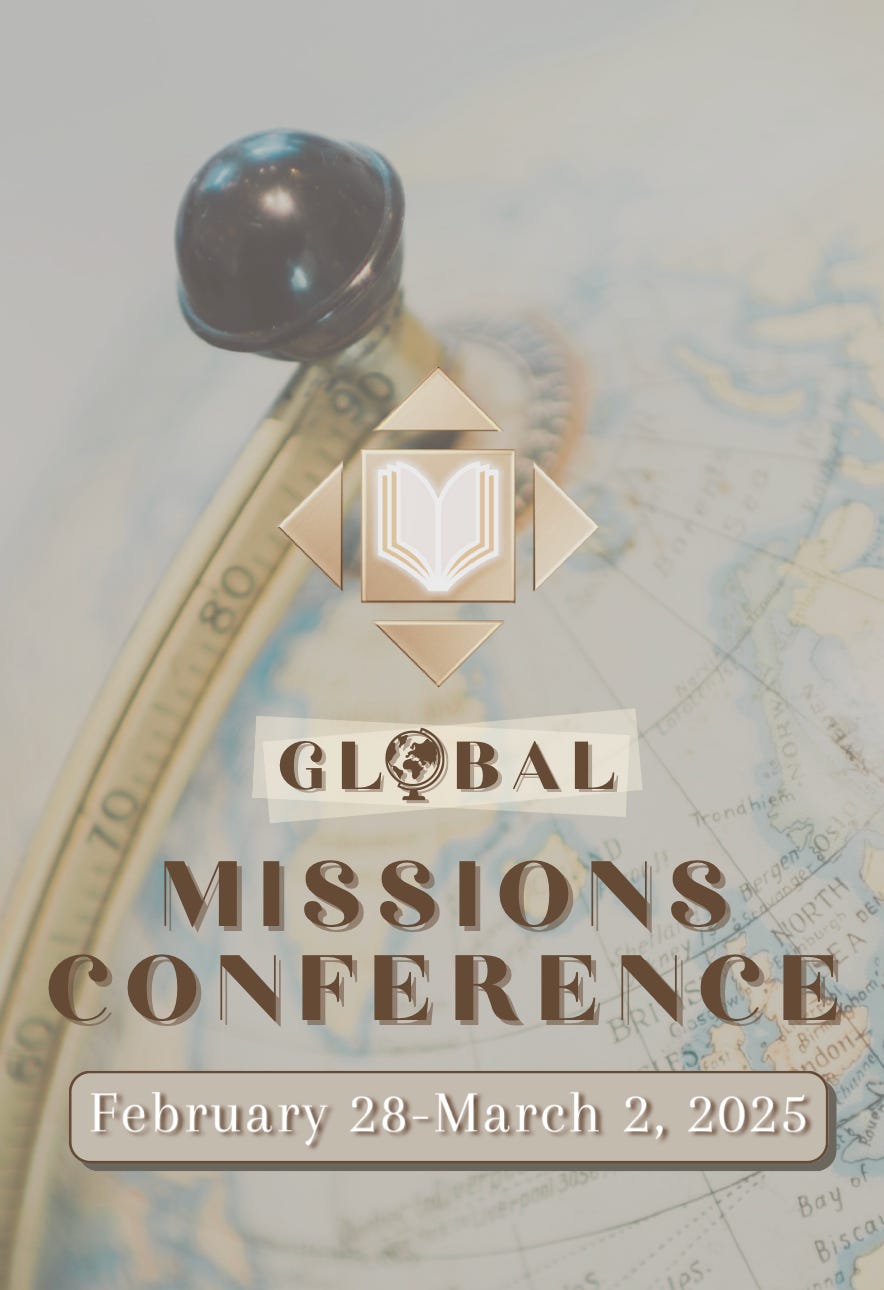
[Note to members and friends of First Bible Church: Ken Katayama is the Missions Conference Speaker for our Annual Missions Conference, February 28–March 2, 2025. Click here for details]
Praise the Lord that He touched your heart to make First Bible Church a missions minded and sending church!!! It has been and continues to be such an honor to meet the missionaries FBC sends and supports. They are reaching the whole wold with the gospel!
wow - would love to hear him! I will be in a conference with SIL Global that weekend - check out the status of scripture translation for the world's 7,000+ languages - we have worked on 1,200 of them, but a lot more to do - thank you for this indepth, scholarly, insightful post :)
https://sil.org
https://progress.bible/data/
https://www.ethnologue.com/
https://www.sil.org/resources/language-culture-archives