They Didn’t Like My Article
Insert Frowning Emoji Here

Last week I wrote an article that asked, “Whatever Became of Original Sin?” The brave folks at The Gospel Coalition decided to publish it even though they must have known it would go over like a ham sandwich at a bar mitzvah. That’s because the doctrine of original sin, as crucial as it is to the entire narrative of Scripture and sound Christian doctrine, is not held in high esteem these days. As I point out in the article, a majority of evangelicals no longer believe it.
I understand. The first time I heard it, I didn’t either. I struggled with it and tried to prove from Scripture that it must not be true. But the more I studied it, the more obvious it became that this truth is fundamental to other cardinal doctrines of apostolic Christianity. If you remove it, the other doctrines come crashing down. But the doctrine of original sin is deeply offensive to human pride, and we’re naturally inclined to reject it. Overall, it’s a rather dismal message. But it’s necessary to apprehend the bad news before we can embrace the good news.
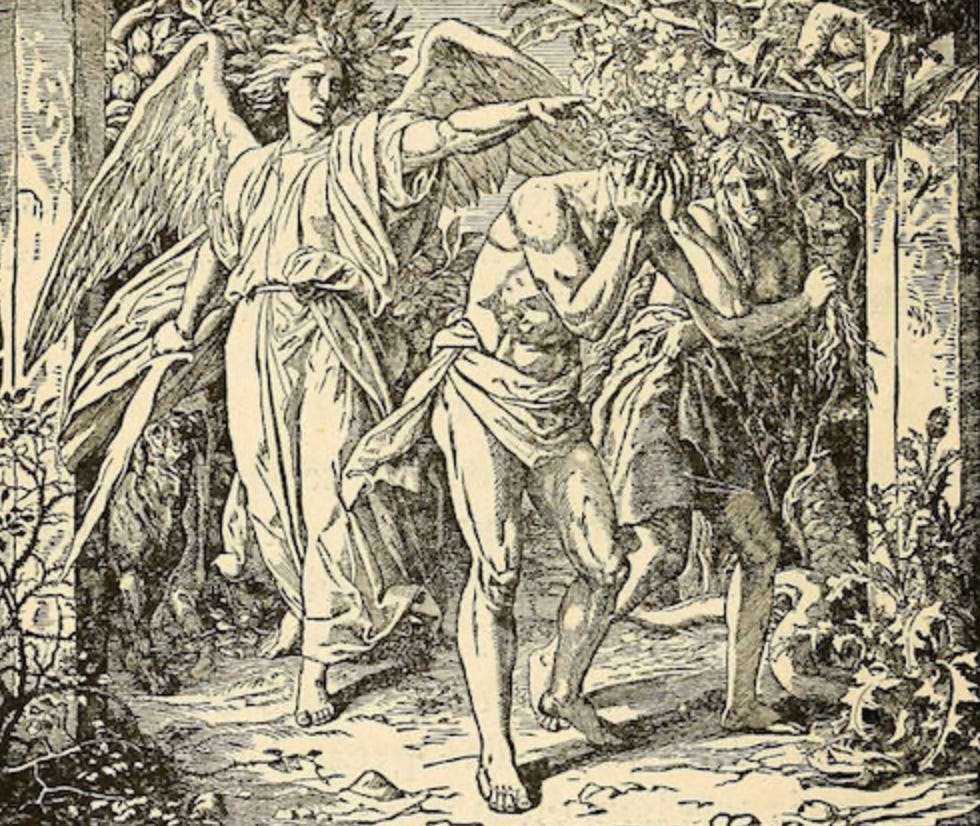
I didn’t have enough space in the short article to anticipate all the objections that I knew it would attract, but when TGC posted the article on Facebook on October 6 it collected a lot of rowdy retorts from angry Catholics, Orthodox, and progressive (or maybe just uninformed) Protestants.
Here are a few thoughts as I reflect on their responses:
1. The negative responses prove the point.
The majority of evangelicals no longer believe in the doctrine of original sin.
2. This doctrine has always been unpopular.
I didn’t mention in the article that I wrote my master’s thesis on this subject because that seemed like an unnecessary flex. But I’ve been thinking about this for a long time. My thesis focused on the rejection of the doctrine of original sin in the churches and colleges (especially Harvard and Yale) in pre-Revolutionary New England. It’s an old and controversial debate.
3. The American church has failed to teach imputation.
There are three great imputations in the Bible. The first is the imputation of Adam’s guilt to us, his descendants (Ro. 5:12). The second is the imputation of the guilt of repentant sinners to Christ (2 Cor. 5:21). The third is the imputation of Christ’s righteousness to those who trust him (2 Cor. 5:21). Christians who oppose the first imputation because “it’s not fair!” seem to have no trouble embracing the second and third imputations. Here’s an excerpt from my book, Brothers, Stand Firm!:
We are born with corrupted bodies and souls that will fail us. We are all quite dysfunctional and often feel a battle of conflicting desires within us. We are broken from the beginning. Why are we like this? It is because Adam’s sin was imputed to all of his descendants and every generation has proven their fallenness by personally, actually sinning as soon as they are aware of right and wrong. We are born this way because of the imputation of Adam’s sin.
4. Protestants don’t know their history.
The creeds, confessions and catechisms of all branches of Protestantism affirm the doctrine of original sin. Here’s a sample:
For the Lutherans: The Augsburg Confession, Article II (1530)
Our churches teach that since the fall of Adam, all who are naturally born are born with sin, that is, without the fear of God, without trust in God, and with the inclination to sin, called concupiscence. Concupiscence is a disease and original vice that is truly sin. It damns and brings eternal death on those who are not born anew through Baptism and the Holy Spirit. Our churches condemn the Pelagians and others who deny that original depravity is sin, thus obscuring the glory of Christ’s merit and benefits. Pelagians argue that a person can be justified before God by his own strength and reason.
For the Anglicans: The Thirty-Nine Articles of Religion, Article 9 (1571)
Original sin standeth not in the following of Adam, (as the Pelagians do vainly talk;) but it is the fault and corruption of the Nature of every man, that naturally is engendered of the offspring of Adam; whereby man is very far gone from original righteousness, and is of his own nature inclined to evil, so that the flesh lusteth always contrary to the Spirit; and therefore in every person born into this world, it deserveth God’s wrath and damnation. And this infection of nature doth remain, yea in them that are regenerated; whereby the lust of the flesh, called in Greek, (which some do expound the wisdom, some sensuality, some the affection, some the desire, of the flesh), is not subject to the Law of God. And although there is no condemnation for them that believe and are baptized; yet the Apostle doth confess, that concupiscence and lust hath of itself the nature of sin.
For the Presbyterians: The Westminster Confession, Chapter 6 (1646)
Our first parents, being seduced by the subtlety and temptation of Satan, sinned in eating the forbidden fruit. This their sin God was pleased, according to his wise and holy counsel, to permit, having purposed to order it to his own glory.
By this sin they fell from their original righteousness and communion with God,and so became dead in sin, and wholly defiled in all the faculties and parts of soul and body.
They being the root of all mankind, the guilt of this sin was imputed, and the same death in sin and corrupted nature conveyed to all their posterity descending from them by ordinary generation.
From this original corruption, whereby we are utterly indisposed, disabled, and made opposite to all good, and wholly inclined to all evil, do proceed all actual transgressions.
For the Baptists: The London Confession, Chapter 6 (1689)
The Baptists affirmed and repeated the Westminster Confession on this point of doctrine. See above.
For the Methodists: The Methodist Articles of Religion, Article 8 (1784)
Original sin standeth not in the following of Adam (as the Pelagians do vainly talk), but it is the corruption of the nature of every man, that naturally is engendered of the offspring of Adam, whereby man is very far gone from original righteousness, and of his own nature inclined to evil, and that continually.
They Liked It in Pittsburgh
The good news is that a lot of people liked the article, including two radio show hosts in Pittsburgh at WORD-FM. After reading the article online they asked if I would talk to them about it during their “Ride Home” show in the middle of Pittsburgh’s afternoon rush hour. The interview is here.
Honestly, I’m not surprised that a lot of people didn’t like my article on original sin. It’s one of the more unpopular truths of God’s Word and it flies in the face of a “feel good” culture. But I know some church history, and one of the things that keeps me encouraged is that being criticized for teaching this doctrine puts me in some very good company.
Where do these nay sayers hide all the verses on the depravity and sinfulness of man, etc. in Genesis 6:5, Romans 5:12, Jeremiah 17:9 Mark 7:21-23, 1 John 1:8, Romans 7:18 to name a few? Talk about putting blinders on truths that are “inconvenient.” Thanks be to God that you preach the whole Bible and do not skip over tough topics and thanks, also, for stirring the pot. Who knows, maybe they will dig into the Word of God.
For thirty-three years you have consistently preached the whole word of God and First Bible Church has experienced this blessing!! May we never take it for granted!!!
From my heart, I thank you, Steve!!!